The erratic hours, physical toll, and emotional fatigue that come with working in an emergency room are enough to push even the most dedicated EM physician to the limit. But many ER docs feel stuck, believing they don't have other options for earning the same income with their skills.
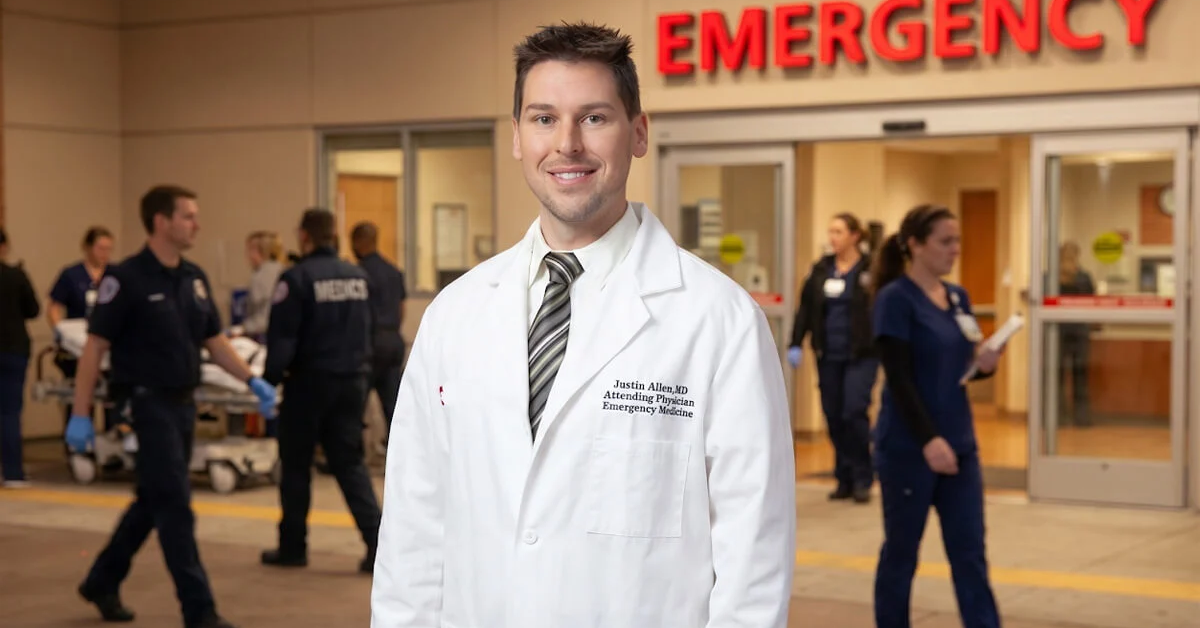
Here's how one emergency medicine physician, Dr. Justin Allen, used his AIR Physician Academy training and community to make the leap to telemedicine—and found higher pay, better hours, more flexibility, and fulfilling work on the other side.
Giving Telemedicine a Try
After years of more traditional emergency medicine positions—on staff in hospitals and working
locums—the chaos of the pandemic and a desire to make a cross-country move got Justin interested in telemedicine. His first gig as a medical director paid a steady monthly retainer, but without the know-how to negotiate a good contract, he ended up being on call 24-7. "After a year of that, I was getting pretty burned out."
He clearly needed another change. And looking back now, he says, if he hadn't joined AIR Academy, "I think I would have gone on Indeed and connected with a couple of things, but I wouldn't have realized there were so many more opportunities out there…and it would have become pretty stagnant and I probably would have gone right back to emergency medicine."
Fortunately, it was at this fork-in-the-road moment that he met Suneer Chander, a fellow emergency medicine MD and the co-founder of AIR Physician Academy.
Joining AIR Elite
At Suneer's suggestion, Justin joined the AIR Elite six-month telemedicine training program, a choice he credits with helping him launch his telemedicine career the right way—not by blindly searching for remote jobs, but by joining a community that helped him find the best job opportunities and build a thriving contract portfolio.
What the AIR Community Provides
-
Connections: Knowledgeable and well-connected, the AIR Elite program and physician community gave Justin the lay of the telemedicine land. "I could never have navigated the world to figure out all the different jobs out there [on my own]." And beyond gaining access to great telemedicine companies, he got invaluable tips on how to work with each one.
-
Experience: His fellow AIR members also helped him build a balanced contract portfolio and organize a daily schedule that makes the most of it, learning, for example, how to blend synchronous and asynchronous care to maximize his time and pay.
-
Efficiency: With help from AIR, Justin's transition to full-time telemedicine happened even faster than he'd hoped. "Had I tried to do it on my own, I think the process of building up contracts and getting a revenue stream going would have been very slow."
A Relaxed Schedule
Today, Justin's work schedule blends a variety of telemedicine contracts, from women’s health to HIV care, weight management to clinical consults. His emergency medicine background comes into play with urgent-level calls and basic patient questions, while courses he took through AIR have prepared him for newer areas like GLP-1 treatments. A typical day might look like this:
-
8–11am: A mix of live video consultations and asynchronous responses to patient questions and health issues, working across two platforms to ensure there's always a patient to connect with.
-
11–2pm: Work for a third platform focused on text-based consultations, where he collaborates with medical AI to deliver care. If there's time, he'll add a few video visits from one of his morning platforms.
-
After 2pm: He occasionally takes urgent-care calls for a fourth platform, but likes to wrap up his day by 3pm.
-
Twice a month: He picks up an ER shift to keep his clinical skills sharp.
Increased Income From Telemedicine
This more relaxed schedule hasn't resulted in a pay decrease—in fact, he's easily matching or exceeding what he made before. Even with a workday that starts at 8am and ends between 12–2pm, he earns about $2000 per day or a minimum of $40,000 per month.
And if he has a specific financial goal, there's plenty of room to ramp up his earnings. Last year, for example, when he was building up savings to buy a house, he pushed to 12–14-hour days, making more than he would have working his highest-paying locum shift every day of the year. (*NOTE: Suneer and Takashi, AIR's founders, discourage this kind of overwork and like to remind members that they switched to telemedicine to escape a life of 12-hour shifts!)
But Justin is quick to point out that a 12-hour day of telemedicine is a world away from a 12-hour ER shift—he's at home, he can take real breaks, he has personal time, he gets to travel (most recently to Europe and Japan). It's not 365 days of grind, but a schedule—and earning potential—he can control.
Fulfilling Telemedicine Work
Beyond the schedule and pay, he finds telemedicine work to be genuinely fulfilling; he treats patients who are sincerely appreciative for the help he provides (not always the case in the ER!). Many live in medical deserts, so virtual care allows them to be seen, tested, and treated in ways they might not otherwise have access to.
The AIR Difference
Optimizing telemedicine work to support the lifestyle you want to lead—whether that's gaining control over your schedule, reaching a specific income goal, or rediscovering what you love about practicing medicine—requires a lot of specialized knowledge and support. It's possible to get there without a program like AIR Elite and a community like AIR Physician Academy, but the road is much steeper, slower, and more frustrating without an experienced guide.
"It's easy to lose motivation if you don't know how to navigate it. AIR gave me the opportunity to find people who were excelling and figure out what they were doing."
And moving forward, if one contract ends or another isn't quite the right fit? "That's when I lean on the group."

 By: Ileana Street